THE TRUTH ABOUT MATURE BROWS
✨ BLOG: The Truth About Mature Brows (And Why Most Women Get It Wrong)
If you’ve noticed your brows aren’t quite what they used to be…
you’re not imagining it.
Over time, it’s completely natural for brows to thin, fade, and lose their shape. Hormonal changes, over-plucking in earlier years, and simply the ageing process can all contribute to brows looking sparse or uneven.
But here’s where most women go wrong…
They try to fix it with the same approach that works for younger skin.
And that’s exactly why the results often look too harsh, too heavy — or just not like them.
🌿 Mature Brows Require a Different Approach
When working with mature clients, the goal is never to “create new brows”…
It’s to restore what was always there — in a softer, more refined way.
This means:
Avoiding overly dark or blocky shapes
Working with the natural bone structure and facial changes
Creating definition without harshness
Enhancing the eyes without overpowering the face
Because the truth is — less really is more.
And when done correctly, the result shouldn’t look like cosmetic tattooing…
it should simply look like you’ve woken up looking fresh and put-together.
✨ It’s Not About Looking Younger — It’s About Feeling Like You Again
So many of my clients don’t come in wanting a dramatic change.
They come in saying things like:
“I just want to look a bit more polished”
“I’m tired of filling them in every day”
“I don’t feel like myself anymore”
And that’s what this is really about.
Not chasing trends.
Not trying to look like someone else.
But gently bringing back:
Structure
Balance
Confidence
💫 The Power of Subtle Enhancement
With the right technique, mature brow enhancements can:
Frame the face more softly
Lift and open the eye area
Restore symmetry
Reduce the need for daily makeup
All without looking overdone.
This is especially important for mature skin, where texture, elasticity, and tone all need to be considered carefully.
🤍 You Deserve Results That Feel Like You
If you’ve ever felt hesitant about brow treatments because you’re worried about them looking too bold or unnatural — you’re not alone.
That’s exactly why my approach is tailored specifically for mature clients.
Every treatment is designed to enhance, not overpower…
so you still feel like yourself — just more confident, more defined, and more you.
✨ Thinking About Enhancing Your Brows?
If your brows have changed over time and you’re ready to explore a soft, natural enhancement…
I’d love to guide you through what’s possible.
Book your 30 minute Consultation below:
THE GAP IN CARE - AND THE STANDARD THAT CHANGES IT…
Australia’s healthcare system is missing a critical piece in the breast cancer recovery journey and women are paying the price.
For thousands of breast cancer survivors, reconstruction is deemed “complete” long before their healing actually is.
Areola restoration, a procedure deeply tied to identity, dignity, and psychological recovery remains widely treated as a cosmetic afterthought rather than a clinical necessity.
The result?
Inconsistent patient outcomes
No standardised protocols across providers
Limited access to qualified, trained practitioners
Financial barriers that force women into private pathways
And perhaps most importantly…
Women are discharged from care while still feeling incomplete in their bodies.
This is not just a clinical oversight.
It is a systemic gap in care.
The Opportunity for Change
Here’s the truth most people don’t realise:
The infrastructure for change already exists.
Medicare already recognises this work, there is an item code in place.
Yet the lack of standardisation, awareness, and integration means it is vastly underutilised.
When areola restoration is repositioned within a clinical framework, everything shifts.
This opens the door for:
Alignment with Medicare funding pathways
Structured referral systems through surgeons and healthcare providers
Integration into hospital-based and public care models
Equal access for every patient, not just those who can afford private treatment
This is not about creating something new.
It’s about activating what already exists and implementing it properly.
The Standard Being Built
The Areola Queen Restoration Method™ has been developed to bridge this exact gap.
This is a structured, paramedical approach designed to:
Standardise treatment delivery
Uphold clinical safety and integrity
Improve long-term patient outcomes
Enable scalable integration within healthcare systems
This work moves beyond the fragmented, cosmetic model currently in place.
It establishes a clear, repeatable, clinically aligned standard one that healthcare systems can adopt, trust, and implement.
The Shift
This is the transition that must happen:
From cosmetic → clinical
From optional → essential
From inconsistent → standardised
Because when a woman completes breast reconstruction without areola restoration, her care is not complete.
Final Word
The system hasn’t failed because the solution doesn’t exist.
It’s failed because the solution hasn’t yet been standardised.
Now it is.
Why Australia Needs a National Standard for Areola Restoration
Every year in Australia, thousands of women undergo breast reconstruction after mastectomy.
For many, the final step in reclaiming their body is areola restoration, recreating the natural appearance of the nipple-areola complex.
Yet despite how important this final stage is for emotional healing and body confidence, there is currently no national standard governing how areola restoration is performed or taught.
That needs to change.
Right now, most practitioners offering areola tattooing are trained through general cosmetic tattoo courses, where the procedure is treated as just another pigment application.
But areola restoration is not simply cosmetic tattooing.
It requires an understanding of:
• post-surgical anatomy
• scar tissue behaviour
• pigment retention in compromised skin
• colour theory specific to reconstructed tissue
• trauma-informed client care
These are not small details. They are the difference between a result that simply exists… and a result that truly restores confidence for a survivor.
Women who have undergone breast reconstruction deserve practitioners who are specifically trained in this work, not practitioners who add it as an extra service after a general cosmetic course.
Survivors deserve consistency.
They deserve safety.
And they deserve results that reflect the highest level of specialised care.
This is why I have chosen to focus exclusively on advanced areola restoration.
Not as one of many services, but as a field that deserves its own standards, methodology, and certification.
Over the past years, I have refined what is now known as The Areola Queen Restoration Method™ a specialised approach designed specifically for post-reconstruction skin.
And now the next step is clear.
Australia needs a structured pathway for practitioners who want to perform this work properly.
A pathway that ensures practitioners understand not just how to perform the procedure, but why every step matters.
That is why I am building The Areola Queen Restoration Method™ to be taught from Tinted Love Academy.
Not simply to teach a technique but to establish a national standard for areola restoration training.
Because when standards rise, outcomes rise.
And when outcomes rise, survivors receive the level of care they truly deserve.
This is the future of areola restoration in Australia.
And we are only just getting started.
— Rachel
Founder, The Areola Queen Restoration Method™
3D Areola TATTOOING
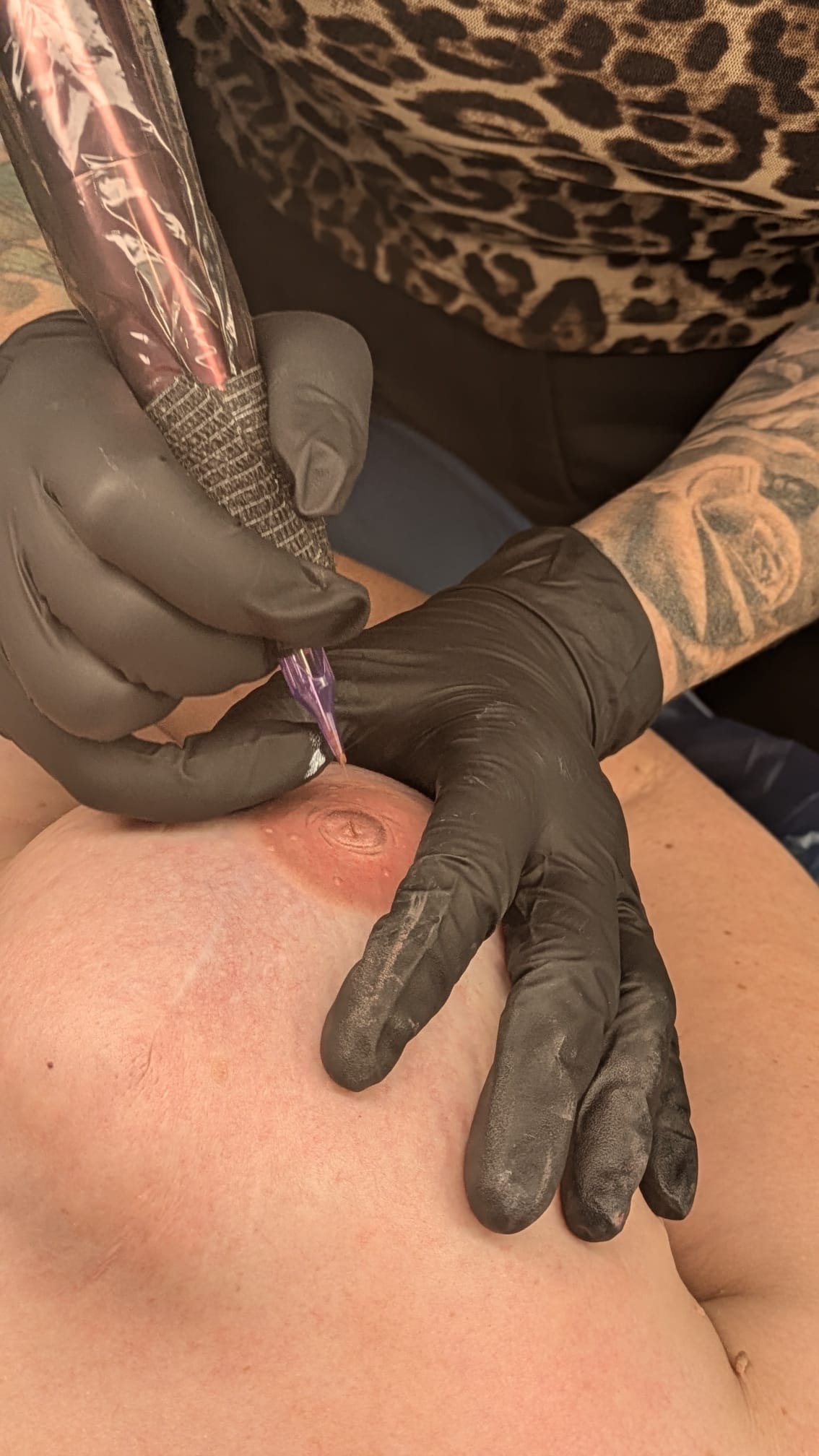
3D areola tattooing after breast cancer is far more than a cosmetic treatment; it is often a powerful final step in healing that helps women feel whole, feminine, and “like themselves” again after mastectomy. This specialised tattoo can dramatically improve body image and confidence, easing some of the invisible emotional weight that survivors carry long after treatment ends.
What is 3D areola tattooing?
3D areola tattooing is a form of advanced cosmetic and paramedical tattooing that recreates the realistic look of a nipple and areola on the breast after surgery. Using light, shadow, and carefully blended pigments, the artist creates a three-dimensional effect on flat skin so the breast looks more natural, even if there is no surgically reconstructed nipple.
For many women, this is the final stage of their reconstruction journey after mastectomy, implants, or flap surgery. It is tailored to each individual—colour, size, and placement are all customised—so the result honours both their body and their story.
The emotional impact after mastectomy
Losing the breast and areola can feel like losing a deeply personal part of identity, sexuality, and womanhood. Many women describe feeling “unfinished” or disconnected from their bodies when they look in the mirror and no longer recognise their reflection.
3D areola tattooing helps close that emotional loop by restoring a familiar, complete image on the chest, which can soften the daily visual reminder of cancer. Survivors often report an immediate lift in self-esteem and a sense of relief, describing the moment they first see their new areolas as a turning point in finally moving forward.
Mental health benefits and reclaiming your reflection
The mental health benefits of 3D areola tattooing are significant because they reach far beyond the treatment room. Key ways it supports emotional wellbeing include:
Reclaiming identity: Restoring the areola can help women feel like “themselves” again, reducing feelings of loss and helping them reconnect with their bodies after invasive treatments.
Reducing anxiety and sadness: Seeing a more natural breast shape in the mirror every day can ease ongoing distress, body anxiety, and grief linked to the visual reminders of surgery.
Supporting intimacy: Many women find they feel more comfortable undressing in front of a partner again once the chest looks more natural and less clinical, which can improve closeness and confidence in relationships.
Creating a sense of closure: For some survivors, completing their areola tattoo feels like closing a chapter—shifting the focus from “patient” to survivor and allowing more mental space for joy, future plans, and self-care.
At its heart, this treatment is about giving something back that cancer once took away—choice, control, and the ability to recognise the woman in the mirror with pride rather than pain.
Why choosing a compassionate artist matters
Because 3D areola tattooing is so personal, working with an artist who understands breast cancer recovery, scarring, and the emotional sensitivity of this area is vital. Skilled practitioners combine technical expertise with trauma-informed, gentle care—taking time to listen, explain each step, and create a result that feels empowering, not clinical.
The right environment should feel safe, calm, and supportive, recognising that this appointment is often not “just another tattoo” but a big emotional milestone. From thoughtful positioning and privacy to aftercare guidance and open conversation, the entire experience can become a positive part of the healing journey rather than just a medical task.
Honouring your story with Pink Love Story Noosa
Beyond the procedure itself, many women benefit from spaces where they can rest, process, and reconnect with their bodies and their lives after cancer. Retreats designed specifically for breast cancer survivors have been shown to support emotional healing through connection, nature, and shared experience with other women who truly understand.
For those wanting to pair their 3D areola tattoo journey with deeper rest and self-nurturing, the Pink Love Story Noosa stay offers a gentle, breast-cancer–focused mini-retreat experience where you are held, seen, and celebrated—not as a patient, but as a whole, deserving woman. It is a beautiful option if you are ready to reclaim your reflection, honour everything you have survived, and give yourself the kind of softness and care you would offer anyone you love.
Enquire now
If you are ready to reclaim your reflection after breast cancer, 3D areola tattooing can be a powerful, affirming step toward feeling at home in your body again. And if your heart is calling for something more—a moment to pause, to be held, and to honour your journey with quiet luxury—the Pink Love Story Noosa retreats offer a beautiful way to do exactly that.
To explore dates, packages, and availability for your own Pink Love Story experience, please enquire now via the Pink Love Story page so your bespoke journey can be created just for you.
3D areola tattooing after breast cancer is far more than a cosmetic treatment; it is often a powerful final step in healing that helps women feel whole, feminine, and “like themselves” again after mastectomy. This specialised tattoo can dramatically improve body image and confidence, easing some of the invisible emotional weight that survivors carry long after treatment ends.
What is 3D areola tattooing?
3D areola tattooing is a form of advanced cosmetic and paramedical tattooing that recreates the realistic look of a nipple and areola on the breast after surgery. Using light, shadow, and carefully blended pigments, the artist creates a three-dimensional effect on flat skin so the breast looks more natural, even if there is no surgically reconstructed nipple.
For many women, this is the final stage of their reconstruction journey after mastectomy, implants, or flap surgery. It is tailored to each individual—colour, size, and placement are all customised—so the result honours both their body and their story.
The emotional impact after mastectomy
Losing the breast and areola can feel like losing a deeply personal part of identity, sexuality, and womanhood. Many women describe feeling “unfinished” or disconnected from their bodies when they look in the mirror and no longer recognise their reflection.
3D areola tattooing helps close that emotional loop by restoring a familiar, complete image on the chest, which can soften the daily visual reminder of cancer. Survivors often report an immediate lift in self-esteem and a sense of relief, describing the moment they first see their new areolas as a turning point in finally moving forward.
Mental health benefits and reclaiming your reflection
The mental health benefits of 3D areola tattooing are significant because they reach far beyond the treatment room. Key ways it supports emotional wellbeing include:
Reclaiming identity: Restoring the areola can help women feel like “themselves” again, reducing feelings of loss and helping them reconnect with their bodies after invasive treatments.
Reducing anxiety and sadness: Seeing a more natural breast shape in the mirror every day can ease ongoing distress, body anxiety, and grief linked to the visual reminders of surgery.
Supporting intimacy: Many women find they feel more comfortable undressing in front of a partner again once the chest looks more natural and less clinical, which can improve closeness and confidence in relationships.
Creating a sense of closure: For some survivors, completing their areola tattoo feels like closing a chapter—shifting the focus from “patient” to survivor and allowing more mental space for joy, future plans, and self-care.
At its heart, this treatment is about giving something back that cancer once took away—choice, control, and the ability to recognise the woman in the mirror with pride rather than pain.
Why choosing a compassionate artist matters
Because 3D areola tattooing is so personal, working with an artist who understands breast cancer recovery, scarring, and the emotional sensitivity of this area is vital. Skilled practitioners combine technical expertise with trauma-informed, gentle care—taking time to listen, explain each step, and create a result that feels empowering, not clinical.
The right environment should feel safe, calm, and supportive, recognising that this appointment is often not “just another tattoo” but a big emotional milestone. From thoughtful positioning and privacy to aftercare guidance and open conversation, the entire experience can become a positive part of the healing journey rather than just a medical task.
Honouring your story with Pink Love Story Noosa
Beyond the procedure itself, many women benefit from spaces where they can rest, process, and reconnect with their bodies and their lives after cancer. Retreats designed specifically for breast cancer survivors have been shown to support emotional healing through connection, nature, and shared experience with other women who truly understand.
For those wanting to pair their 3D areola tattoo journey with deeper rest and self-nurturing, the Pink Love Story Noosa stay offers a gentle, breast-cancer–focused mini-retreat experience where you are held, seen, and celebrated—not as a patient, but as a whole, deserving woman. It is a beautiful option if you are ready to reclaim your reflection, honour everything you have survived, and give yourself the kind of softness and care you would offer anyone you love.
If you would like, share the link to your Pink Love Story Noosa page and the preferred call-to-action (for example “Enquire now” or “Request retreat dates”) and a tailored final section with direct booking language for your website can be written to match your brand voice.
Enquire now
If you are ready to reclaim your reflection after breast cancer, 3D areola tattooing can be a powerful, affirming step toward feeling at home in your body again. And if your heart is calling for something more - a moment to pause, to be held, and to honour your journey with quiet luxury, The Pink Love Story Noosa retreats offer a beautiful way to do exactly that.
To explore dates, packages, and availability for your own Pink Love Story experience, please enquire now via the link below so your bespoke journey can be created just for you.